


I recently made the error of perusing the New York Times op-ed page to find Molly Jong-Fast proclaiming her plastic surgery to the world. Sure, do what makes you happy. This is what choice feminism is for — the notion that we should do what makes us feel good.
The problem is that even while declaring she has the right to get surgery without feeling like a bad feminist, implicitly telling us not to judge her, she also blames the decision on men as though she has no agency. In the American context, feminism is about outsourcing agency to men.
Our looks shape our livelihoods, our romantic prospects and our visibility in the world. In response to that, my mother and these women were each forced to make a choice: Should they try to keep up or opt out? We ask ourselves this question with the full understanding that plastic surgery perpetuates beauty standards that are rooted in misogyny [emphasis mine]. Which gets to the bigger question: Does trying to keep up make me a bad feminist?
I don’t think so. I never quite bought into the idea that the best response to a culture that would exclude women from public view if they didn’t look young or pretty enough was to spurn it. My face, for instance, is directly connected to my livelihood; I talk about politics on TV for a living. Eventually, I, too, had to make the choice: Conform to the standards of beauty and hopefully prolong that part of my career or reject those standards and resign myself to aging. I’ve always believed (perhaps self-servingly) that it’s more important to be in the arena, to share my ideas, than to allow myself to be forced out. So I had the surgery.
I’ll grant the premise that keeping up doesn’t make one a bad feminist, and there is a certain pressure. I don’t consider myself a feminist unless I’m in the Indian cultural context, but let us suspend disbelief. In the choice-feminism framework Jong-Fast writes from, keeping up is simply a choice, so it cannot bear on one’s feminist chops. I’ll proceed with the analysis, taking the above as a good-faith argument.
I’ll address the following
What are beauty ‘standards’?
From where do they emanate?
Who are the enforcers?
Who punishes deviation?
Corporate women — the case for procedures
I happen to work in a field where most women seem to have done something to their faces, and I once made the mistake of trusting a woman with an entirely constructed face and hair. I am thirty-nine myself, so this question is acute.
In consulting and corporate life in general, ageism persists because employers don’t want to pay for experience. As millennials become VP types, they’re going to hesitate to hire anyone visibly older into subordinate positions and risk a challenge.
The race to Mar-a-Lago face in the upper corporate echelon is economically rational.
I know my self-belief will be more crucial to my latter life than my looks. I also know that when I pass fifty, I may need to decide what to do with my own face, because experience signals expense.
Right now people look at me and think I’m too young to be commanding what I do, but in ten years or so they’ll think the opposite. This is not discussed as much as the Botox problem, but I also think men and women have an easier time dismissing women who look youthful in certain fields.
A woman’s forties are perhaps the one decade in which she is neither too young nor too old to be taken seriously.
The two types of corporate women
I’ve been observing what my peers and Gen X women I know have done to their faces. The women with technical skills tend not to do procedures, while women in sales and marketing have done fillers and Botox. I’m technical in function but also sell, so I see both groups up close.
I surmise that the women with technical skills have something to lean on other than their looks, and they’re in a male-dominated field. Nerdy men would actually be weirded out to encounter an engineer with a fake face, and I’ve not once encountered such a woman in my travels with technical people1.
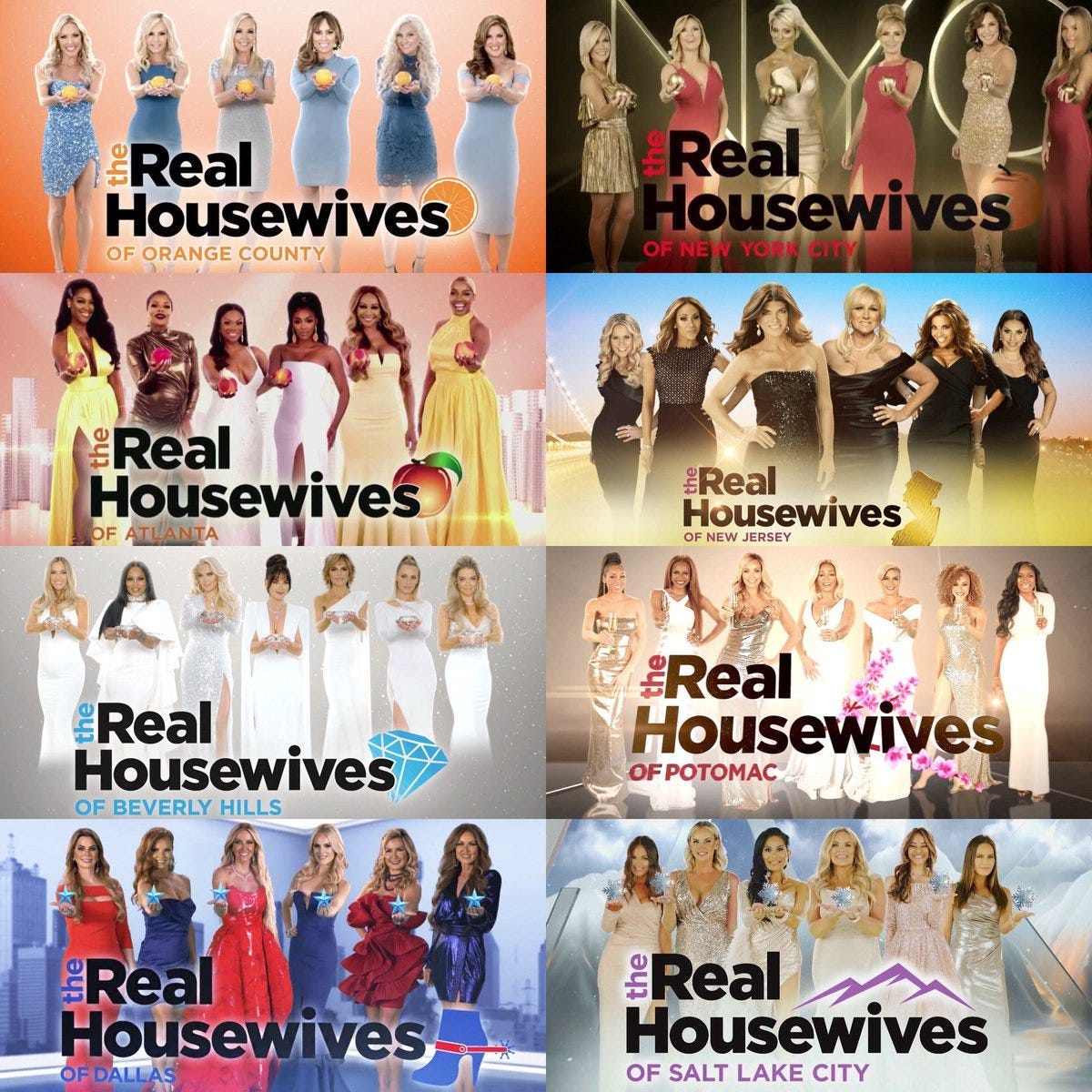
I suspect that the gender composition around a woman correlates with her propensity to get injections. Women in marketing, sales, and other communication-heavy functions are surrounded by women. Even if none of these women are competing for mates in corporate contexts, the substrate of competition between women never subsides. You don’t need to be competing for men; you just need to be in close proximity with a majority of women for the crabs-in-a-bucket mentality to take hold.
Beauty standards are a convenient scapegoat
Jong-Fast writes that beauty standards are rooted in misogyny, and these are the cause of women getting procedures. Let us deconstruct.
The term ‘beauty standards’ has made my eye twitch for some time.
Beauty standards are not real. They emanate from the beauty industrial complex, which is now symbiotic with Instagram and TikTok.
Beauty influencers and models are women. The bulk of beauty industry workers are women, at all levels. Small businesses like spas and salons are owned and operated by women.
Advertising images portray what are interpreted as ‘beauty standards’, but there’s no requirement for a regular woman to see the image of a woman selling desire as the paragon of beauty. No one forced us to internalize this. Our environment is saturated with images of women to elicit desire for consumption.
We are not competing with models for men. The body type an average man would prefer would be fat in the desire-creation industry. The regular woman’s body is an advertising vehicle.2
The fact that most beauty industry CEOs are men does not erase the fact that women have the most influence on the industry as producers and consumers. The argument that predominantly male CEOs means men are the source of beauty standards misunderstands how trends are set and conveniently erases women as the agents of those trends in beauty consumption.
Women drive 60-80% of consumer spending in the beauty and personal care categories.3 They pass brand loyalty down to their children, especially their daughters, when it comes to beauty products. Corporations depend heavily on feedback from female consumers and on the magazines (staffed by women) that sell these ‘standards’. The highest-growth beauty brands of the recent decade were founded by women.
Women are the trendsetters for beauty, and arguably all of popular culture.
These standards are actually highly fluid aesthetic trends that women choose to heed, often unconsciously. What is called a standard is a common preference women see around them. We don’t have to emulate these preferences. These are not standards that last for generations or even decades; they are the result of marketing cycles for specific products.
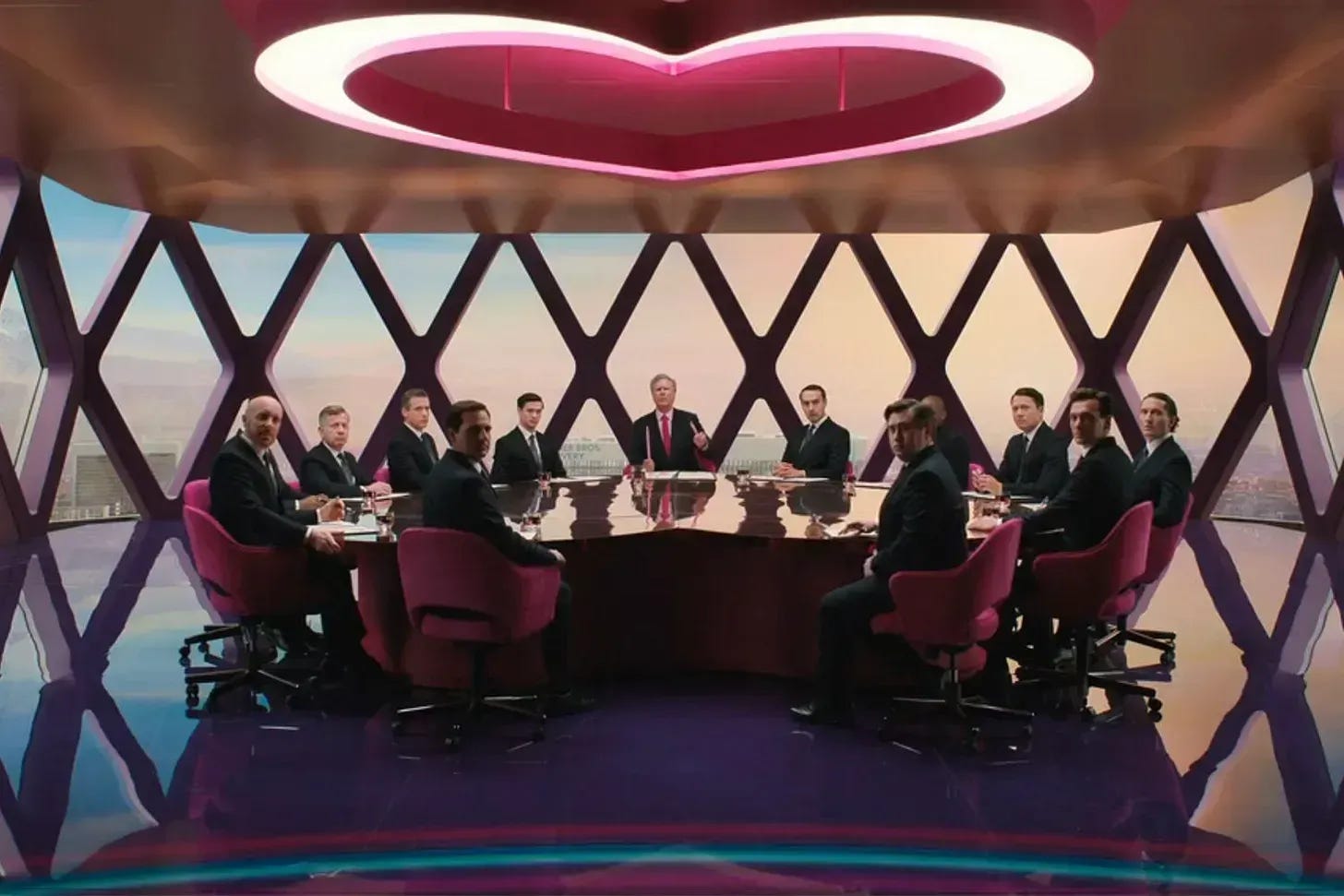
Women enforce the standards horizontally while wanting to believe they’re vertical, coming from male CEOs. The Barbie movie was a masterclass in this accountability laundering in the boardroom scene, as though only men continue to push Barbie’s standard blonde beauty onto girls. Mattel’s board is actually evenly split, and the workforce is 55% women. Fathers are not buying Barbie dolls for their daughters.
The Barbie Effect
When I was growing up, I understood the ideal of beauty to be blonde hair and blue eyes.4
Blondes are the most morally innocent and considered the most attractive because they’re childlike. Truly blonde hair is most common in young children; adult blonde hair is far darker than the beauty industry would like us to think. Light hair color occurs most frequently in children, and this is why blondes are best able to get away with antisocial behavior under the guise of moral innocence. They are the apex of female beauty not because they’re necessarily the hottest, but because they’re idealized. Dark-haired women who maintain the lightest shade will have a far easier time weaponizing vulnerability and feigning innocence.5